

Banana plugs or spades for your speaker cable? If your amplifier and speakers have the standard 4mm binding posts fitted to almost everything made since the 1990s, banana plugs are the convenient termination and spades are the maximum contact one, and either is a large step up from bare wire. Bare ends fray, oxidise and occasionally short across the posts; a proper plug does none of these things. For a cable you plan to keep, rhodium plated pure copper connectors are what we fit on our own systems, and they are what this guide will nudge you toward.
The three ways to finish a speaker cable
Bare wire is free and universal: strip, twist, thread through the post, tighten. Its problems arrive slowly. Copper oxidises, and through a humid Sydney summer it oxidises faster than you might think, trading contact area for corrosion. Strands fray with every reconnection, and one whisker of copper bridging the posts can silence an amplifier or worse. For a temporary rig, fine. For a system you care about, it is the false economy.
Banana plugs are the 4mm sprung pin that slides straight into the end of a binding post. They make connecting and reconfiguring a system a ten second job, they cannot fray, and a good one grips firmly for decades. Their contact area is smaller than a spade's, which matters less than the forums suggest, and they keep curious fingers and stray metal away from live terminals on the amplifier end.
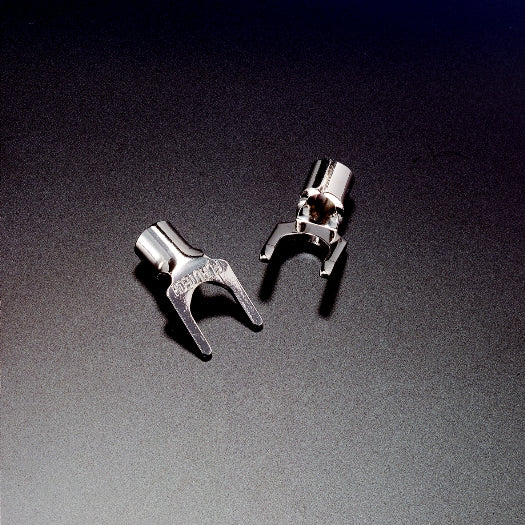
Spades are the traditionalist's choice: a fork that wraps the post and is clamped hard under the post's collar. They offer the largest contact area of the three and the most mechanical security, which is why we default to them on heavy cables. A thick cable hanging from a banana plug loads the socket sideways; a spade transfers that weight to the post itself.
The 4mm binding post standard
Nearly every modern amplifier and speaker uses the same five way binding post: a 4mm hole through the end for banana plugs, a cross hole for bare wire or pins, and a collar that clamps spades. Budget gear with spring clip terminals takes bare wire or pin connectors, which is the one place a pin is the right answer. A few quirks exist. Some older European amplifiers shipped with plastic plugs blocking the 4mm sockets, a safety regulation workaround; the plugs prise out. And British brands such as Arcam and Cyrus Audio long favoured the recessed BFA style connector, which needs its own plug entirely. Check your equipment before ordering terminations, or send us a photo of the back panel and we will tell you what fits.
Why the metal matters
A connector is part of the signal path, and the metal it is made from conducts exactly as well as its alloy allows. Brass, the base of most cheap plugs, carries only about a quarter of the current of copper for the same cross-section. Pure copper connectors cost more to machine and are the reason the good Japanese plugs feel dense in the hand.
Plating is the other half of the story, and each of the three common finishes has a genuine character. Gold resists corrosion completely, but it is soft, and repeated insertions wear it through to the base metal. Silver is the best conductor of them all and tarnishes happily in open air. Rhodium is the jeweller's answer: extremely hard, effectively immune to tarnish, and good for decades of insertions without wearing through. It is slightly less conductive than silver, but plating is measured in microns and the current travels in the copper beneath. Rhodium plated pure copper is the combination we standardised on in the workshop, and it is what we reach for on our own benches.
What we offer at the checkout
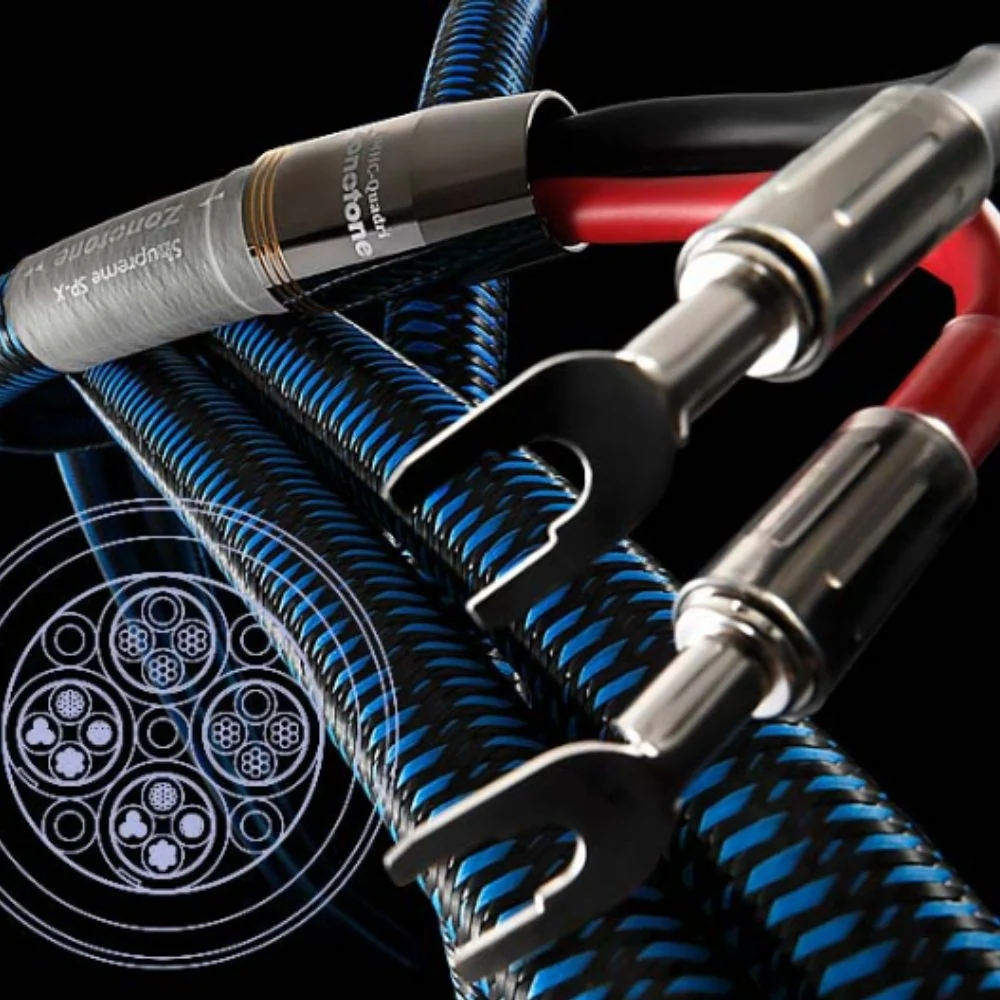
Every cable in our speaker cables range presents a termination menu when you order, and the ladder is worth understanding. Our house rhodium plated banana and spade options sit at the accessible end and are genuinely good connectors. The Furutech FP-203(R) spade, a $101 option on cables like the Oyaide ACROSS 3000, is machined from pure copper with a rhodium finish and a build quality that has to be handled to be believed. At the top, Oyaide's own SRBN banana and SPSL spade plate pure copper first in silver and then in rhodium, combining silver's conductivity with rhodium's permanence; on the ACROSS 3000 menu they run to $253 and $309 respectively, and they are among the finest speaker terminations made anywhere. On heavyweights like the TUNAMI NIGO V2 we fit spades more often than bananas simply for the sake of the binding posts.
Our recommendation
Spades where the binding posts allow them, bananas where convenience matters or sockets are recessed, pins for spring clips, and bare wire only for rigs you consider temporary. Whatever you choose, choose copper under rhodium and you will never think about it again. The supporting cast of sockets, caps and tuning hardware lives in our accessories category, and if you would like a cable built with a specific connector, or a second opinion on what your amplifier accepts, the custom order form reaches the same people who do the terminating.