
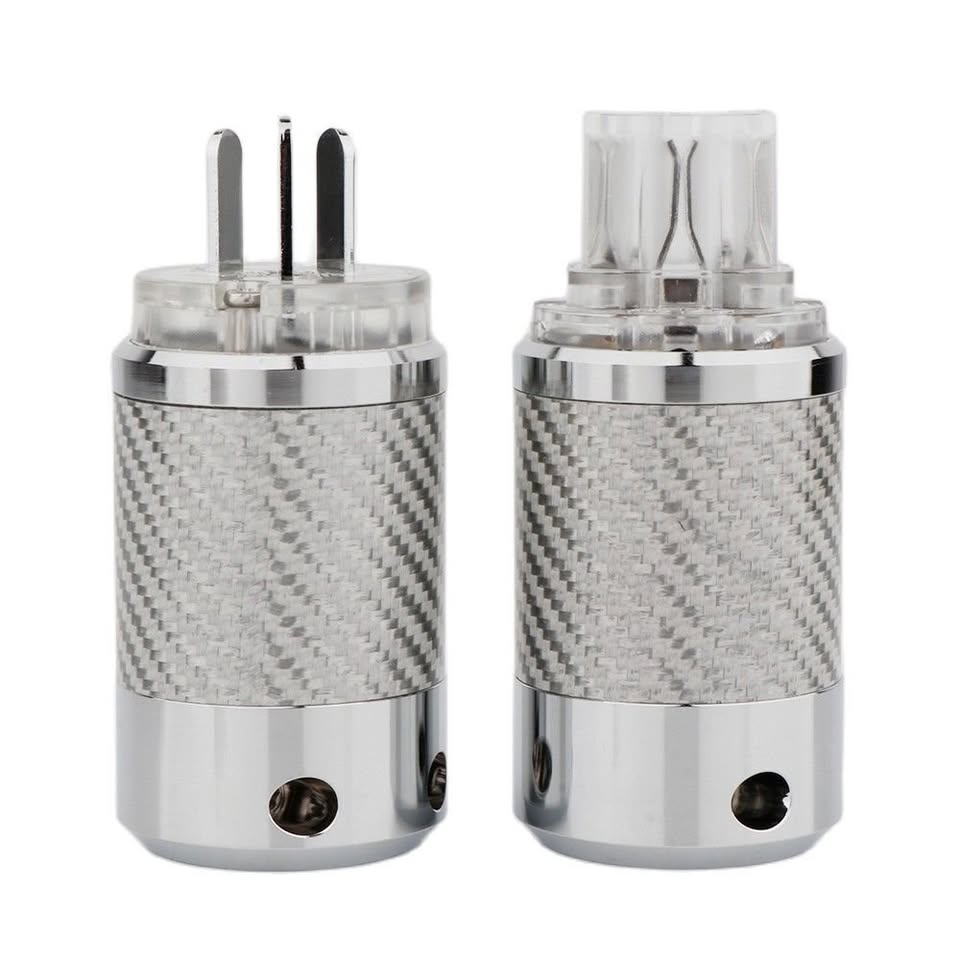
The Furutech FI-11 is a high grade IEC C13 connector for the component end of a mains power cable, and it is the default upgrade for anyone building or rebuilding a hi-fi power lead. Its contacts are cryogenically treated and demagnetised under Furutech's alpha process, its body grips cables from 6.6mm to 16mm, and it comes in three plating variants: unplated copper, gold and rhodium. For a DIY mains cable that will outlive the moulded lead it replaces, it is where we would start.
What the FI-11 actually is
Strip the name down and the FI-11 is the female IEC end of a power cable, the part that plugs into the C14 inlet on the back of your amplifier, DAC or CD player. The moulded version on a stock lead is a pressure fit of thin brass contacts in soft plastic. The FI-11 replaces that with machined contacts in a nylon and fibreglass body inside a polycarbonate shell, with a proper cable clamp and stainless hardware. It is rated 10A at 250V, comfortably beyond anything a domestic component will draw at Australian mains voltage, and it accepts cable diameters from 6.6mm to 16mm, so it swallows the heavy audiophile power wires that defeat lesser connectors.
The alpha process
Furutech subjects every current carrying part to its two stage alpha treatment. The first stage is deep cryogenic processing, which relieves the internal stresses left in the metal by drawing and machining. The second is demagnetisation, stripping residual magnetism from the metal. Neither step is visible, and both are why Furutech connectors behave differently from the same geometry made by someone else. Whatever you make of the strongest claims, the mechanical result is beyond argument: contacts that grip firmly, plate evenly and hold their surface for decades.
Cu, G or R: choosing a variant
The three FI-11 finishes share the same body and differ in the contact plating, and each has a genuine character and a practical trade.
- FI-11(Cu), unplated copper: the purist's choice, with nothing between the copper contact and the inlet. It offers the lowest contact resistance when new, and it will slowly oxidise in open air, which matters less than it sounds inside a tight IEC joint but is worth knowing in a humid coastal house.
- FI-11(G), 24k gold plated: gold never corrodes, and its presentation in a power cable is the warmest of the three. Gold is soft, so it suits cables that get plugged in and left alone rather than swapped weekly.
- FI-11(R), rhodium plated: the hardest wearing of the family, effectively immune to tarnish and good for a working lifetime of insertions. Rhodium is the finish we standardise on in the workshop for exactly that reason.
What it does for a power cable build
Be honest about scope: a connector is a joint, and a good one removes a problem rather than adding a flavour. A moulded IEC plug loosens and oxidises over the years, adding resistance at exactly the point where an amplifier draws hardest. An FI-11 clamps the cable mechanically, grips the inlet firmly and stays put. In a complete build on serious wire the result is a quieter background and easier dynamics; screwed onto thin bargain flex, it is jewellery.
Our recommendation
Building your own lead: FI-11(R) for permanence, (Cu) for the purist path, (G) if you prefer its character, and buy from a genuine Furutech source because counterfeits of this exact connector are common. If you would rather have the whole cable built and tested, our power cables are terminated to order with Furutech and Oyaide hardware, and loose connectors and inlets live in the DIY category. Tell us the component and the wire you are working with via the custom order form and we will spec the ends to match.