

An RCA cable is an analogue interconnect that carries an unbalanced audio signal between two components, with one plug per channel. The red and white plugs carry the right and left channels, the centre pin carries the music, and the outer ring serves as both the ground and the shield. It has been the standard connection between a source and an amplifier in home hi-fi since the 1940s, when the Radio Corporation of America designed the plug to connect its turntables to its radios.
Nearly a century later the same plug is still on the back of almost everything, and the questions we hear across the workshop counter have not changed much either. What does the cable actually do, when should you use it, and what separates a five dollar lead from one that costs a hundred times that? This is the guide we give customers, written down.
The plug and the signal, in plain terms
Each RCA plug is the end of a coaxial cable: a single centre conductor surrounded by a tubular shield, with insulation between them. The centre pin carries the signal. The outer ring connects the shield to the other component's ground, and the shield does double duty as the return path for the signal and as a screen against interference. That arrangement is called unbalanced, because the signal travels on one conductor referenced to ground, rather than as a pair of opposed signals.
Unbalanced has one practical consequence worth understanding. Any interference that gets past the shield is added directly to the music, and nothing downstream can separate the two. Over short runs in a quiet room this rarely matters. Over long runs, or in rooms full of chargers, dimmers and routers, it matters a great deal, and it is why shielding quality is the first thing we look at in an RCA cable.
RCA or XLR: which one should you use?
The three pin XLR is the other common interconnect, and the choice between them is simpler than the forums suggest. Use XLR when both components offer genuinely balanced connections and the run is longer than a couple of metres. A balanced link sends the music down two conductors in opposite phase and cancels any noise that crept in along the way, which is why studios wire entire buildings with it. Use RCA for short runs between components sitting near each other, which describes most home systems, or whenever one end of the link only offers RCA sockets.
Two cautions from the bench. First, some equipment wears XLR sockets that are not truly balanced inside, wired with the third pin simply grounded; a balanced cable into one of these is an expensive RCA. Check the manual for the words balanced output. Second, there is nothing inherently inferior about a well made RCA connection. Between a DAC and an amplifier a metre apart, a properly shielded RCA pair will do the job beautifully, and that describes the majority of systems we set up.
Where RCA does the work
Three jobs account for most of the RCA cables we build.
Subwoofer connection. A receiver or processor with a dedicated subwoofer or LFE output feeds the sub with a single RCA lead, because bass is summed to mono. Some older subwoofers present left and right inputs instead, which a single plug into the left input usually satisfies, and a Y splitter fills both if the sub's auto sensing is fussy. Either way, this is an unbalanced run that often stretches five metres or more across the room, crossing power cords along the way, so shielding earns its keep here more than anywhere else in the rack.
Turntable to phono stage. A turntable's signal is the smallest and most fragile in the system: a few millivolts, equalised with the bass cut and treble boosted at the pressing plant. It must go to a phono input or an outboard phono stage, never to an ordinary AUX input, which expects roughly two volts and will bury a cartridge's output under noise. The lead itself wants low capacitance and thorough shielding, and most decks add a separate earth wire to keep hum at bay. Phono leads are a specialty of their own; the ones we trust most live in our turntable and phono category.
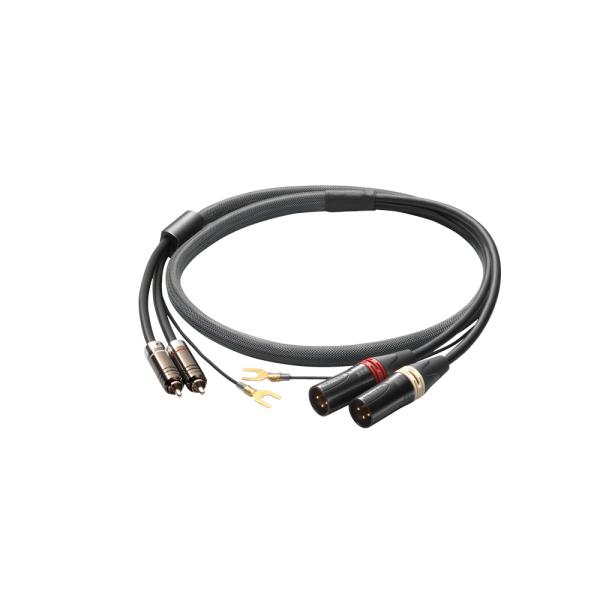
DAC, CD player or streamer to amplifier. The everyday stereo pair, and the one where cable quality is easiest to hear because the signal is at full line level and the run is short. This is the connection most people mean when they ask what an RCA cable is, and it is where a well built pair quietly outperforms the leads that came free in the box.
Shielding and construction: the specs that matter
Strip the jackets off a serious RCA interconnect and three things decide how it behaves. The conductor, where high purity, properly annealed copper preserves the low level detail that ordinary copper blurs. The geometry, where how the conductors are twisted, spaced and insulated sets the cable's capacitance, and capacitance is what rolls off treble over distance. And the shield, where a dense copper braid will always reject more interference than a token wrap of foil.
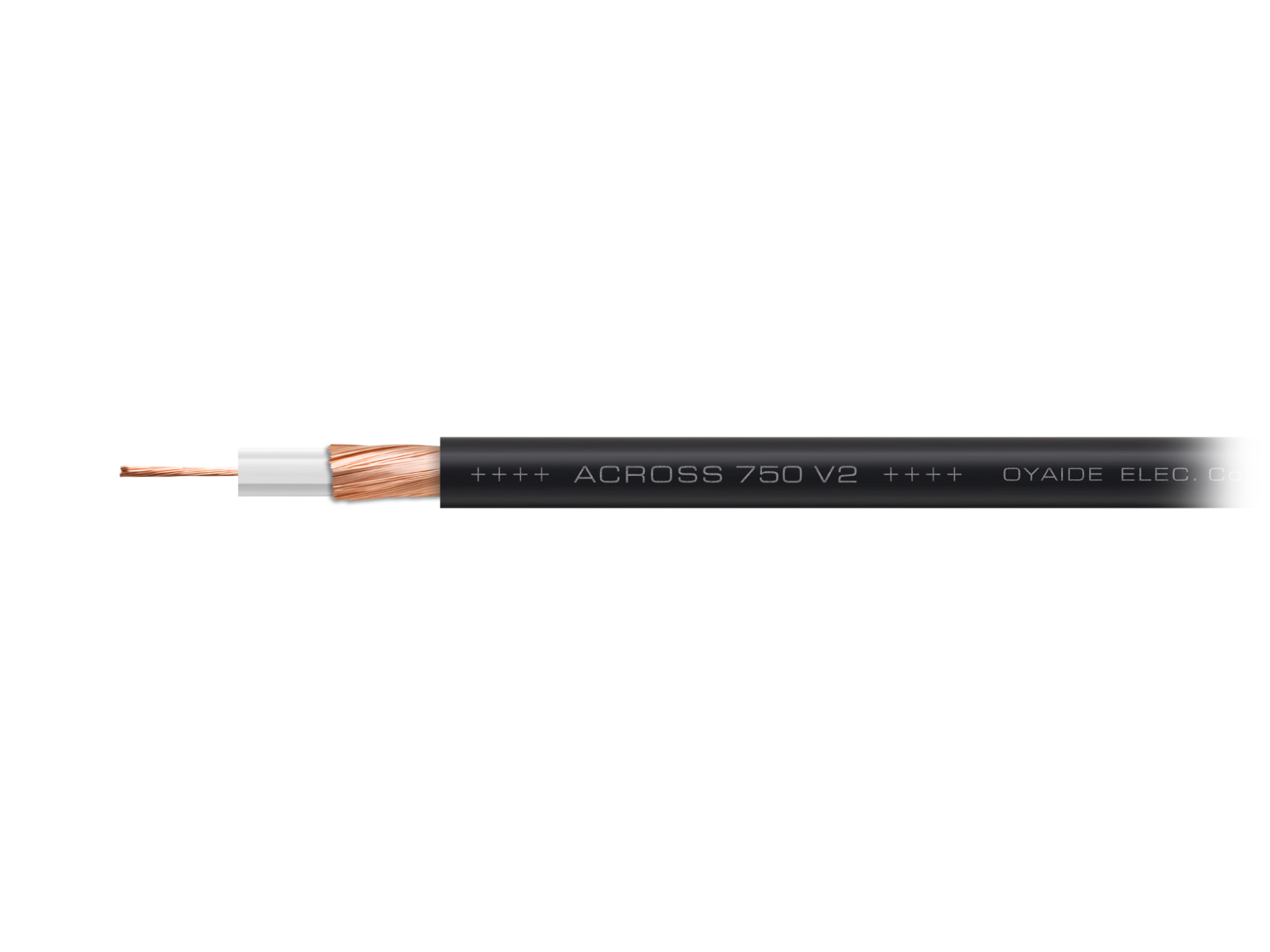
The Japanese wires we build on attack all three. The Oyaide PA-02 V2 behind our Saba interconnect is a studio grade design with a braided 102SSC copper shield, the same precision drawn copper as the signal conductors beneath it. The ACROSS 750 V2 in our Jami RCA uses a cross shaped insulator and air layer damper to hold capacitance down to around 68pF per metre, which keeps the top end open even on longer runs. These are engineering choices with measurable consequences, and they are what the money buys before any question of brand or mystique.
What a good RCA cable costs
A moulded RCA lead from a general retailer costs five to fifteen dollars, and for connecting a television's headphone output to a soundbar it is honestly all you need. Its conductors are thin, its shield is nominal, its plugs are brass with a wash of plating, and its strain relief will fail at the plug within a few years of being moved. None of that is audible in a forgiving system at a metre long. All of it becomes audible, or mechanically annoying, as systems and expectations grow.
Hand built cables cut from genuine Japanese wire and terminated properly start where the free leads end. Our two starting points tell the story. The Jami RCA, from $142, pairs the ACROSS 750 V2 with carbon fibre barrelled, rhodium plated plugs and is the pair we hand people first: quiet, quick and tonally even. The Saba, from $136, builds the PA-02 V2 into a slightly more robust cable that can be ordered with RCA or XLR ends, which makes it the flexible choice for mixed systems. Both are cut to the length you specify and tested on the bench before they leave.
A word of honesty on the upper reaches. Interconnects follow steeply diminishing returns, and the right spend scales with the system. On a resolving amplifier and speakers, moving from a moulded lead to a Jami is a change a room of listeners will pick. Moving from a Jami to a cable five times its price is a refinement the same room might split on. Buy for the system you have, in the length you need, and you will not overspend.
Our recommendation
Short runs between nearby components: a well shielded RCA pair is all the connection you need, and it is where we would put the first cable dollars in any system. The full range of stereo pairs we build, RCA and XLR, lives in our analogue interconnects category, every one cut to order in our Sydney workshop. If your setup involves a long subwoofer run, a turntable with specific needs, or lengths that do not come in a packet, describe the system on the custom order form and we will spec and quote the exact cables.