

The last thirty millimetres of a speaker cable do more work than the three metres before them. Every strand of copper arrives at one small joint, and how that joint is finished decides how much of the cable's capability actually reaches the binding post. We terminate speaker cables every day, and the same questions come across the counter in rotation: bananas or spades, what fits my old receiver, and does the joint really need soldering. Here are the answers we give, with the reasoning attached.
Start with the sockets you actually have
Termination is dictated by the equipment, so read the back panels before choosing anything. Five way binding posts, the standard on nearly everything made since the 1990s, accept bananas through the end, spades under the collar, and bare wire or pins through the cross hole. Spring clip terminals, the red and black press tabs on vintage amplifiers and budget mini systems, accept bare wire or a slim pin and nothing else. A few British amplifiers use recessed sockets that want a slim BFA style plug. When customers write to us, the most useful thing they attach is a photo of the back panel; ten seconds with a photo settles what an hour of description cannot.
When spades beat bananas
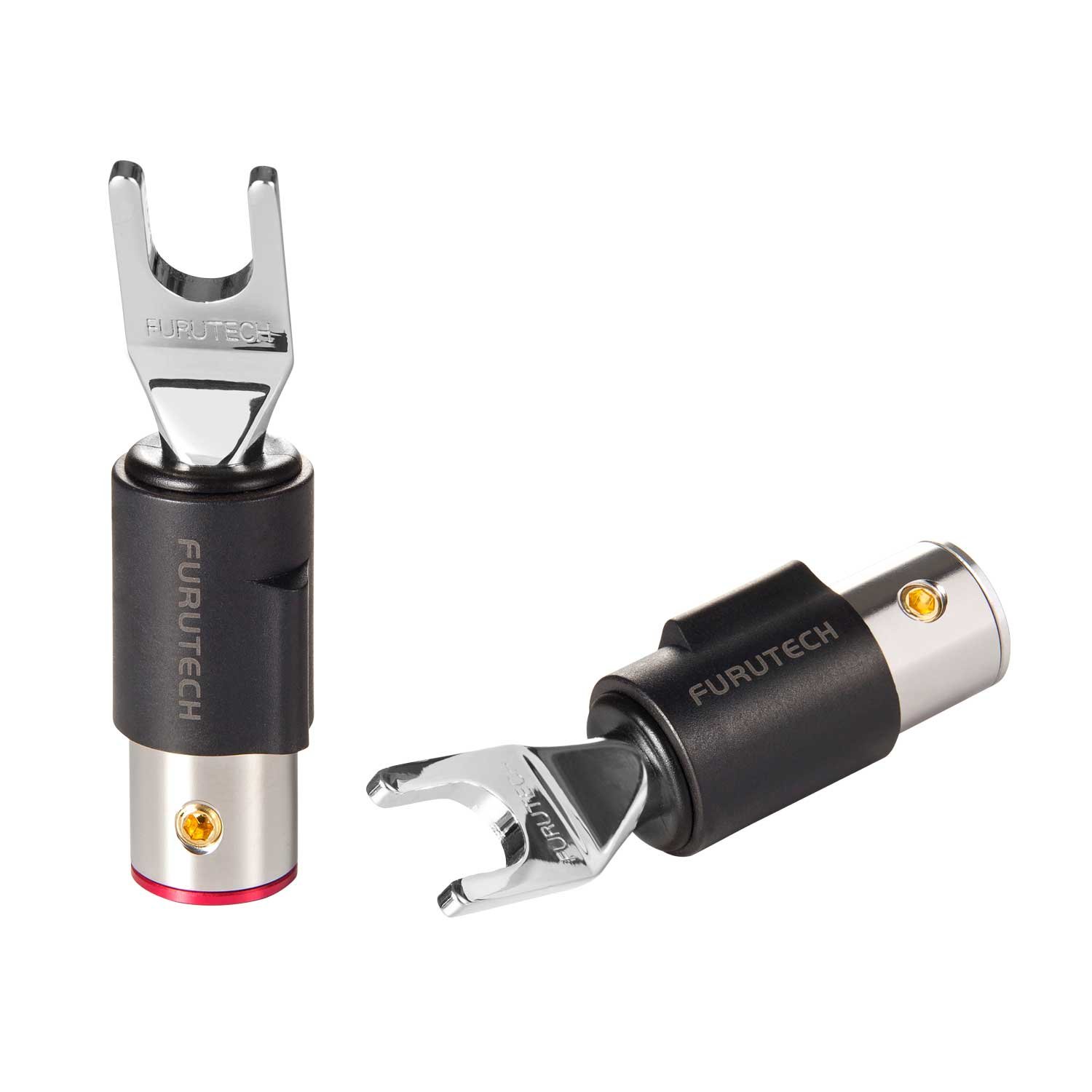
Spades are the choice we make by default on anything heavy. The fork wraps the post and is clamped hard under the collar, which gives the largest contact area of any termination and transfers the cable's weight into the post itself rather than levering sideways on a socket. On a thick cable like the Oyaide TUNAMI NIGO V2, a spade is close to mandatory: hang that much copper off a banana plug and the socket carries a permanent sideways load. Spades also survive decades of being left alone, which is exactly what most speaker connections do. Their one demand is room. Tightly packed amplifier backs and wall hugging speaker stands can leave no space for the spade's swing, and that is when the banana wins the argument back.
When bananas are the right answer
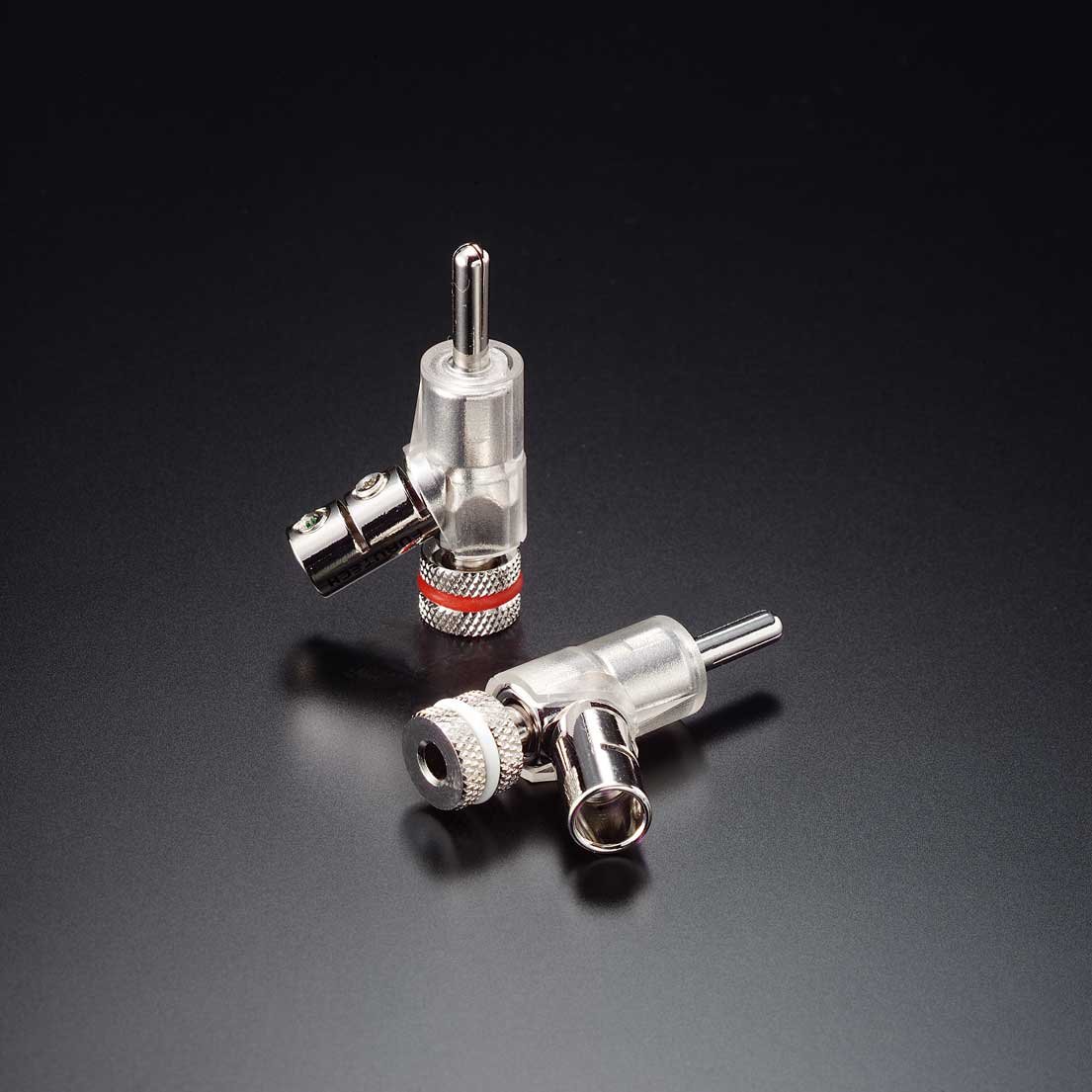
Banana plugs are the termination for systems that get moved, swapped and reconfigured. They connect in seconds, they cannot fray, and on the amplifier end they keep the exposed metal of a live output covered, which matters in houses with children or curious cats. Recessed sockets that leave no room for a spade take a banana happily. A good banana grips with sprung contacts and holds firm for decades: the Furutech FP-202(R) is our workshop default, and the CF-202-NCF-Plus(R) is the flagship. Our banana versus spade guide covers the comparison in more depth, including why the metal under the plating matters.
When only a pin will do
Spring clip terminals change the question entirely. The clip's jaw accepts a bare conductor a couple of millimetres thick, and neither a banana nor a spade will fit. For a vintage receiver or an older mini system, the elegant answer is a pin termination: a slim solid rod that inserts like bare wire but never frays, and never leaves a whisker of copper behind to short across the clips. The Furutech FP-200B is the classic of the type. If the clips are strong and the cable is light, bare wire remains honest and free; twist the strands tight, trim them clean, and re-strip the ends every year or two as the exposed copper oxidises. What we will not do is solder bare ends intended for spring clips, because solder wicks up the strands, creates a hard point that snaps with flexing, and leaves the joint brittle exactly where it needs to be soft.
Crimp, screw or solder: how the joint should be made
Three methods hold the conductor in the connector, and each has its place. Screw clamps are the field serviceable option and the standard on connectors meant for DIY; done properly, with the strands twisted tight and the screw torqued down, they are entirely reliable. Crimping, done with the correct die, cold welds the barrel to the bundle and makes the most gas tight joint of the three. Soldering makes the most intimate electrical connection and is what we use on most workshop builds, with the caveat that it demands skill: too much heat and the insulation shrinks back from the barrel, too little and the joint is a resistor waiting to be discovered. Whichever method is used, the connector's own clamp should grip the cable jacket so the conductor joint never carries the mechanical load. That single detail separates a termination that lasts twenty years from one that fails the first time the cable gets tugged.
Terminations in a custom build
A custom order lets each end of the cable be finished for the socket it actually meets, and mixed terminations are more common than you might think: spades at the speakers, where weight and contact area matter, bananas at the amplifier for safety and convenience. Bi-wiring doubles the count, with four connectors at the amplifier end and eight at the speakers, and it is exactly the situation where a purpose built cable beats adapters and piggybacked plugs. Every speaker cable we build, from the Oyaide ACROSS 3000 upward, presents its termination menu at the checkout, and the full range lives in our speaker cables category. If your amplifier's sockets are unusual, or you want one cable terminated two different ways, describe the gear on the custom order form and we will confirm what fits before a strand is cut.