

Of all the claims in audio, "digital cables sound different" is the one most likely to get you uninvited from dinner parties. The counterargument writes itself: it is just ones and zeros. The rebuttal is less quotable but more true. A digital audio cable is a transmission line carrying a high frequency analogue waveform, and its job is to deliver that waveform with its edges intact and its impedance constant. Reflections, jitter and noise are all analogue problems. They live in the cable, and they are audible.
Three cables, three jobs
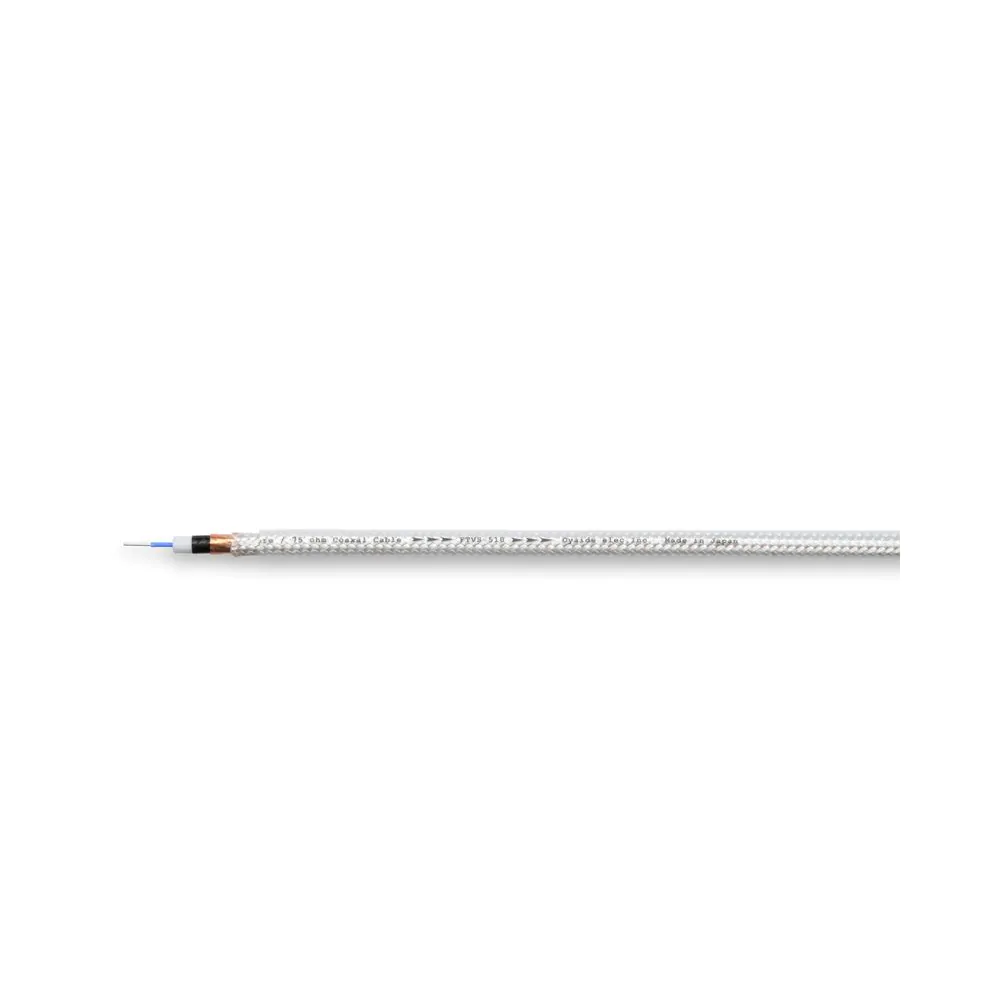
We build three digital interconnects from Oyaide wire. Jami uses the DST-75 V2, a 75 ohm coaxial design in 102SSC copper, finished with rhodium plated RCA or true 75 ohm BNC. The RUMI COAXIAL/BNC steps up to the FTVS-510, whose centre conductor is 5N pure silver, terminated with Oyaide's own SLSC silver centre pins. And for balanced digital, Rumi AES runs the FTVS-910, a 110 ohm pure silver design for AES/EBU links, fitted with Oyaide Focus 1 XLRs.
Listening
The test rig was a CD transport into a DAC, which remains the fairest way to hear a digital cable because the comparison is immediate. On Dire Straits' "Private Investigations", the DST-75 based Jami already showed the telltale sign of a good coax: the reverb around the picked guitar notes stopped truncating and bloomed to its natural length. Swap in the silver FTVS-510 and the change was not tonal, it was temporal. Transients arrived with cleaner edges, the maracas in "Ride Across the River" separated into individual strikes, and the soundstage stopped collapsing inward during dense passages.
AES/EBU is the connoisseur's connection, and the FTVS-910 based Rumi AES made the case for it. Between a pro spec transport and DAC, Agnes Obel's "Riverside" gained a physical presence in the piano's lower register that the coaxial link only hinted at. If your equipment offers AES, use it. If it offers BNC, use that too; a true 75 ohm BNC connector maintains the cable's impedance right to the chassis, which RCA physically cannot do.

Verdict
Start with the Jami if you are moving off a generic RCA video lead; the improvement will embarrass the old cable. When the rest of the digital chain is resolved enough to notice, the silver FTVS designs are among the most genuinely engineered digital wires made anywhere, and we say that as people who cut and measure them ourselves. The differences are not night and day. They are the last five percent that turns a good system into one you stop thinking about.