

Ask a room of audiophiles whether a power cable can change the sound and you will start an argument that outlasts the drinks. I have some sympathy for the sceptics. A metre and a half of copper at the end of kilometres of grid wiring should not matter. Then you spend an evening with a loom of Oyaide power cables and a familiar system, and the argument quietly loses interest in itself.
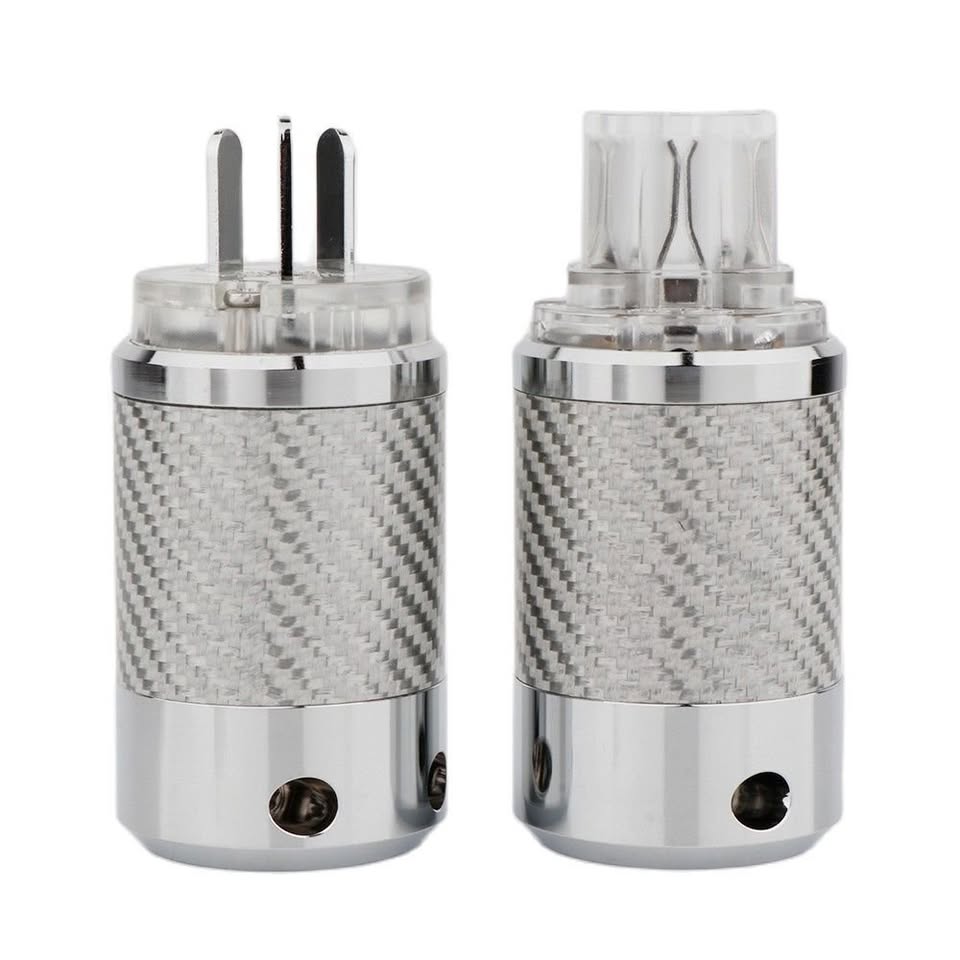
Our workshop builds these to order, so the comparison below is not a theoretical one. Every cable was terminated in house with rhodium plated AU wall plugs and IEC connectors, given forty hours of settle time, and rotated through the same amplifier and DAC on the same night. What follows is what we heard.
The wire itself
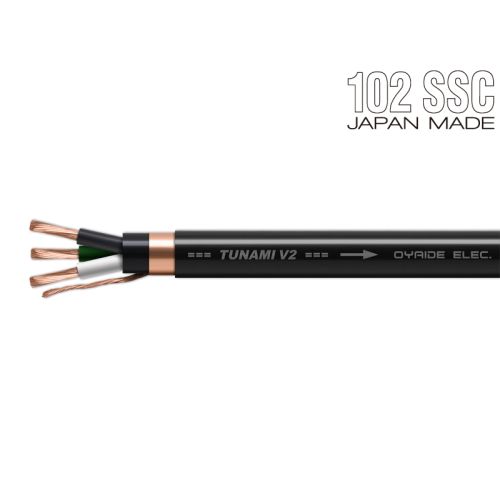
Oyaide is unusual among cable brands in that it controls its copper from the foundry up. The 102SSC conductor used across the range starts life as virgin copper, is machine peeled to strip surface impurities, then drawn and annealed to a tolerance most cable makers never bother with. The V2 generation pairs that conductor with a three layer shielding scheme that borrows from the original TUNAMI: a semiconductor layer to bleed off static, a carbon layer for the odd behaviour of electrons in insulating materials, and a copper foil with a drain wire for external noise. It reads like marketing until you hold a cut end. The build quality is closer to industrial instrumentation than hi-fi jewellery.
Listening
The AXIS-303 from the NEO by Oyaide line is where we tell people to start. On Patricia Barber's Cafe Blue, the opening percussion of "Mourning Grace" sits slightly left of centre with a shaker that should feel like sandpaper on air. With the stock flex the shaker was a smear. With the AXIS it became individual grains. Modest, but repeatable, and for the money it is the easiest recommendation in this entire catalogue.
Moving to the TUNAMI V2 on the amplifier shifted the gains downward into the bass. Bela Fleck's "Flight of the Cosmic Hippo" has a low end that most systems round into a single note. The TUNAMI kept the pitch of each descent intact and, more interestingly, let the drum skin's bloom decay into the room instead of stopping dead. The BLACK MAMBA V2 goes after the same territory with a darker, denser tonality; on Yello's The Eye it gave the synth bass a slightly thicker texture that suited the music, even if the TUNAMI resolved a shade more.
The VONDITA is the outlier: a 4.0sq design with a noticeably more flexible jacket and a voice that leans toward openness rather than weight. On a source component it was superb, throwing a wider stage on the Koln Concert than the TUNAMI managed on the same DAC. On a big power amplifier we preferred the TUNAMI's authority. That is the real lesson of the range: match the cable to the job, not to the price tag.
At the top sits the TUNAMI NIGO V2, 5.5sq of 102SSC that weighs like a mooring line. It is not subtle and it is not cheap, but on a high current amplifier it removed a hardness in the upper midrange we had quietly blamed on the speakers. Massive Attack's "Angel" hit with a physical ease that made the stock cord sound like the amplifier was holding its breath.
Verdict
No power cable will rescue a broken system, and we would rather sell you the AXIS-303 and see you happy than sell you the NIGO and see you disappointed. But once the rest of the chain is sorted, these are among the few upgrades we can demonstrate blind, repeatedly, on a Tuesday night in the workshop. The PC-23 and L/i50 round out the range for tighter budgets, and every one of them is cut, terminated and tested here before it ships.